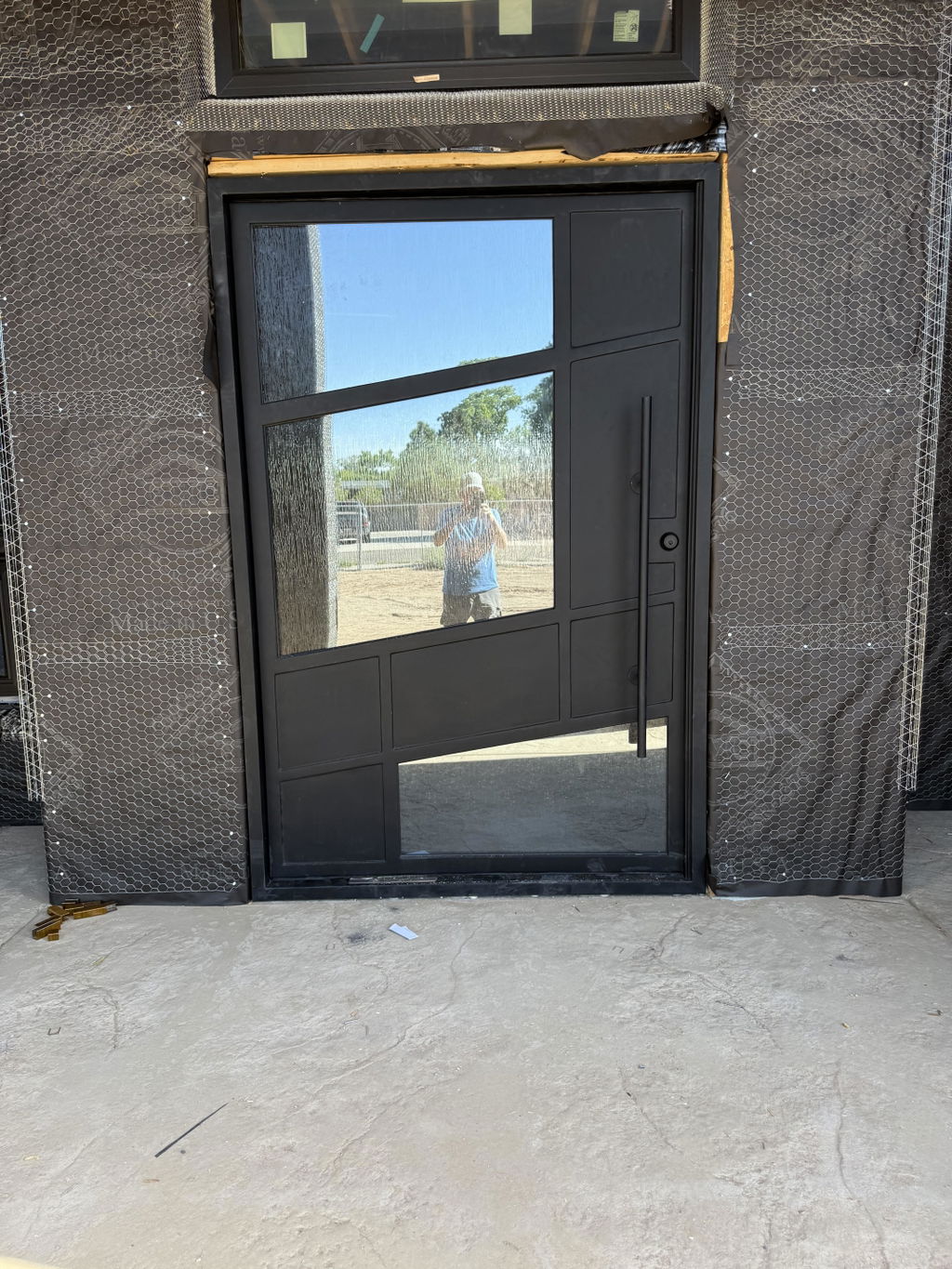
Hidden Behind the Threshold: Small Details Make a Big Difference in Your Iron Door
When renovating a home or replacing a front entry door, most homeowners naturally focus on visible design elements — the finish, glass style, grid pattern, handles, or decorative hardware. However, one important detail is often overlooked: the door threshold.
Although it may seem like a small component at the bottom of the door, the threshold plays a major role in both the appearance and performance of your entry system. Whether you're installing a wrought iron door, an iron French door, or a modern pivot door, understanding the threshold can help you make better decisions for your home.

❓What Is a Door Threshold and Why Does It Matter?
A threshold is a standard structural component on exterior entry doors. It sits between the bottom of the door panel and the floor and extends outward from the frame with a certain height and depth.
Under standard conditions, the threshold extension typically matches the door jamb thickness. This creates a cleaner visual appearance while ensuring that the threshold aligns properly with the overall depth of the door.
💁Why Does an Iron Door Threshold Matter?
Unlike interior doors, exterior doors are constantly exposed to changing weather conditions. Rain, wind, temperature differences, dust, and debris all impact the entry area.
Without a threshold, water can easily enter the home during heavy rain. Since the threshold has a raised profile, it helps create a barrier that prevents water intrusion.
A properly designed threshold also works together with bottom weather stripping and door sweeps to:
✅ Help prevent rainwater from entering the home
✅ Improve weather sealing and energy efficiency
✅ Reduce drafts and air leakage
✅ Keep out dust, insects, and debris
✅ Support proper door alignment and operation
Interior doors typically do not require these functions, which is why most interior doors do not include thresholds.

More Choices Than You Might Think: Types of Door Thresholds
Not every threshold works the same way for every home. Different door styles and installation requirements may use different threshold designs.
🤔In-Swing vs. Out-Swing Doors
To ensure proper door operation and prevent friction, threshold designs differ depending on swing direction. For wrought iron doors and iron French doors, threshold changes based on whether the door swings inward or outward.
For out-swing doors, the threshold is usually positioned on the interior side, and the surface is generally flatter. The design allows the door to swing outward smoothly.
For in-swing doors, the threshold is positioned on the exterior side with a sloped design. The slope helps direct water away from the home during rain.
The best option often depends on personal preference, local weather conditions, and installation requirements.
🎇Pivot Door Threshold Design
Pivot doors are different from traditional hinged doors.
Whether the pivot door swings inward or outward, its threshold design is influenced by the unique pivot mechanism installed at the bottom of the system.
Unlike traditional wrought iron doors or iron French doors, which rely on side hinges and often use raised or sloped thresholds for improved water protection, pivot doors typically feature flatter threshold designs to accommodate their hardware structure and unique rotating movement.

🔥Why Thermal Break Thresholds Matter on Iron Doors
Metal naturally transfers heat more easily than other materials. Because of this, thermal break iron doors use insulation barriers around the frame, glass system, and threshold area.
Compared with standard thresholds, a thermal break system can:
👍 Reduce heat transfer
👍 Minimize condensation
👍 Improve energy efficiency
👍 Increase comfort near entryways
For homeowners living in colder climates or regions with extreme temperatures, upgrading to a thermal break iron door provides improved insulation performance throughout the entire door system—including the threshold.
❓Can You Install an Iron Door With a Nearly Flush Threshold?
Some homeowners prefer a cleaner appearance with a lower-profile threshold and ask whether a recessed installation can create a nearly seamless transition.
The answer is yes — under certain conditions.
A recessed installation places part of the threshold below floor level, creating a lower visible profile and making the threshold feel less noticeable.
However, several factors should be considered:
📌Recess depth must be carefully controlled
📌Rough opening dimensions may need adjustment
📌Door swing clearance must be maintained
📌Waterproof performance may be slightly reduced
While a recessed threshold can improve appearance and accessibility, it requires careful planning with your contractor before installation.
Thresholds may be one of the least noticeable parts of a door, but they significantly affect performance, comfort, energy efficiency, and even long-term durability. Want to know more? Contact us to design your own custom iron door solution.